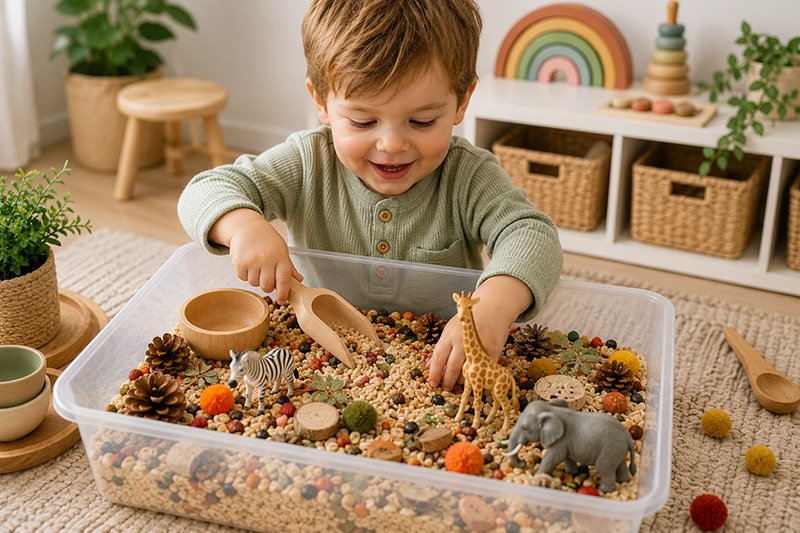
Sensory bins have become one of the most popular tools for early childhood learning, and for good reason. The best sensory bin ideas for toddlers encourage exploration, creativity and hands-on learning while supporting important developmental milestones.
Whether you are a parent, teacher, therapist or homeschooling family in South Africa, sensory bins provide affordable and engaging opportunities for children to learn through play.
In this guide, we explore some of the best sensory bin ideas for toddlers that support fine motor skills, language development, problem-solving and sensory processing.
What Are Sensory Bins?
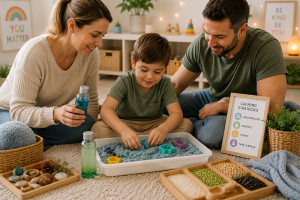
Sensory bins are containers filled with materials that stimulate a child’s senses. Children can touch, scoop, pour, sort and explore different textures, colours and objects.
Sensory bins support learning through play by encouraging children to investigate, experiment and use their imagination.
Some common sensory bin fillers include:
- Rice
- Pasta
- Sand
- Water beads
- Dried beans
- Oats
- Kinetic sand
- Natural materials
Why Sensory Bins Are Important for Child Development
Before exploring the best sensory bin ideas for toddlers, it is important to understand their developmental benefits.
Sensory bins help children develop:
- Fine motor skills
- Hand-eye coordination
- Language skills
- Concentration
- Problem-solving abilities
- Emotional regulation
- Creativity and imagination
- Early maths concepts
They also provide calming sensory experiences that can benefit children with sensory processing differences.
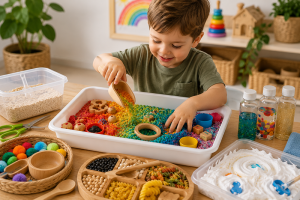
1. Rainbow Rice Sensory Bin
Rainbow rice remains one of the most popular sensory bin activities.
What You Need:
- Coloured rice
- Wooden scoops
- Small bowls
- Measuring cups
- Toy animals
Children can sort colours, practise pouring skills and develop hand strength.
2. Construction Site Sensory Bin
Many toddlers enjoy construction-themed play.
What You Need:
- Dry beans or kinetic sand
- Toy trucks
- Small rocks
- Wooden blocks
This sensory bin encourages imaginative play and problem-solving.
3. Ocean Sensory Bin
Bring the beach indoors with an ocean-themed sensory experience.
What You Need:
- Blue-coloured rice or water beads
- Sea animals
- Shells
- Small containers
Children can learn about marine life while exploring different textures.
4. Farm Animal Sensory Bin
Farm-themed activities support vocabulary development and imaginative play.
What You Need:
- Dried corn kernels
- Farm animal figurines
- Small tractors
- Wooden fences
Encourage children to create stories and identify different animals.
5. Dinosaur Discovery Bin
Dinosaurs remain a favourite theme for many young children.
What You Need:
- Sand
- Dinosaur toys
- Paint brushes
- Small rocks
Children can become palaeontologists while developing fine motor skills.
6. Nature Exploration Sensory Bin
South Africa offers endless opportunities for nature-inspired sensory play.
What You Need:
- Leaves
- Pinecones
- Stones
- Sand
- Flowers
This activity encourages observation and sensory exploration.
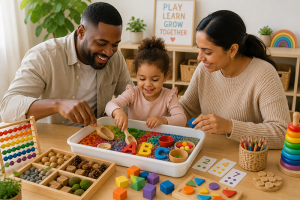
7. Alphabet Sensory Bin
Combine literacy learning with sensory play.
What You Need:
- Rice or oats
- Plastic letters
- Scoops
- Containers
Children can identify letters, practise sounds and build early literacy skills.
8. Colour Sorting Sensory Bin
Sorting activities develop cognitive skills and concentration.
What You Need:
- Pom-poms
- Coloured bowls
- Tongs
- Scoops
Children learn colour recognition while strengthening fine motor control.
9. Water Play Sensory Bin
Water play provides rich sensory experiences.
What You Need:
- Water
- Measuring cups
- Funnels
- Floating toys
Children explore concepts such as volume, movement and cause and effect.
10. Taste-Safe Sensory Bin for Babies and Toddlers
For younger children, edible sensory bins provide safe exploration opportunities.
What You Need:
- Cooked pasta
- Oats
- Jelly
- Whipped foam alternatives
Always supervise children during sensory activities.
11. Space Adventure Sensory Bin
Encourage imaginative exploration with a space theme.
What You Need:
- Black beans
- Glow stars
- Space toys
- Small containers
This activity supports creativity and storytelling.
12. Seasonal Sensory Bin
Celebrate the changing seasons through sensory experiences.
Examples include:
- Autumn leaves and pinecones
- Winter cotton snow scenes
- Spring flowers and seeds
- Summer beach sensory trays
Seasonal sensory bins help children connect learning to their environment.
Tips for Creating Successful Sensory Bins
To create engaging sensory experiences:
- Choose age-appropriate materials.
- Include tools for scooping and pouring.
- Rotate themes regularly.
- Encourage open-ended play.
- Ask questions to promote language development.
- Allow children to lead the activity.
Remember that there is no right or wrong way to explore a sensory bin.
Bringing Learning to Life Through Sensory Play
The best sensory bin ideas for toddlers combine fun, learning and exploration. By providing children with opportunities to investigate different textures, materials and themes, parents and educators can support healthy development while encouraging creativity and curiosity.
If you would like assistance choosing sensory resources or creating engaging learning environments, visit the “Contact Forever Sensory Kids” page for expert guidance.
Conclusion
The best sensory bin ideas for toddlers provide endless opportunities for learning through play. Whether you use rice, sand, water or natural materials, sensory bins help children develop important skills while building confidence, creativity and a lifelong love of learning.