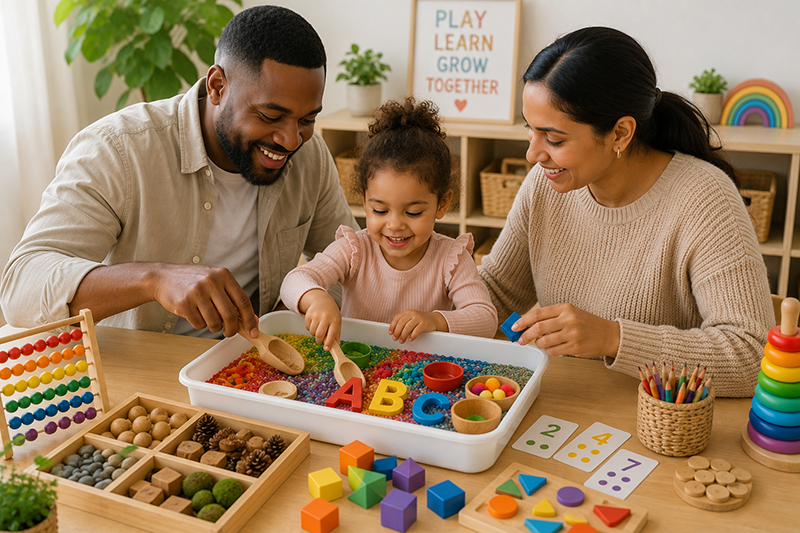
Play is far more than entertainment. Research consistently shows that play-based learning improves academic skills by helping children develop the foundational abilities they need for future educational success. Through purposeful play experiences, children build literacy, numeracy, problem-solving, communication and critical thinking skills naturally and effectively.
For parents, teachers, therapists and homeschooling families in South Africa, understanding how play-based learning improves academic skills can transform the way children experience education and learning.
What Is Play-Based Learning?
Play-based learning is an educational approach that uses play experiences to encourage learning, exploration and skill development. Rather than relying solely on worksheets or structured lessons, children learn through hands-on activities, experimentation and imaginative play.
Play-based learning allows children to:
- Explore new concepts
- Develop curiosity
- Solve problems independently
- Practise social skills
- Build confidence
- Strengthen cognitive abilities
Most importantly, children remain actively engaged in the learning process.
How Play-Based Learning Improves Academic Skills
Children’s brains learn best through active experiences. When children play, they engage multiple areas of the brain simultaneously, creating stronger neural pathways that support long-term learning.
Play-Based Learning Improves Early Literacy Skills
Language and literacy development begin long before children learn to read.
Activities such as storytelling, pretend play and sensory play help children develop:
- Vocabulary
- Listening skills
- Letter recognition
- Phonemic awareness
- Communication skills
- Reading readiness
For example, children playing in a grocery shop role-play activity learn new words, practise conversation and begin recognising written labels.
Play-Based Learning Supports Early Mathematics Skills
Many everyday play experiences introduce important mathematical concepts.
Children naturally learn:
- Counting
- Sorting
- Pattern recognition
- Measuring
- Comparing quantities
- Spatial awareness
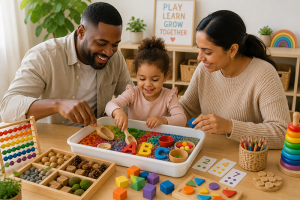
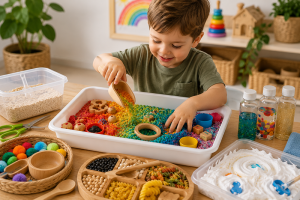
Building blocks, sensory bins and construction activities provide excellent opportunities to develop early numeracy skills.
Sensory Play and Academic Development
Sensory play forms an essential part of play-based learning.
Sensory Activities Improve Concentration and Memory
When children engage in sensory experiences, they strengthen their ability to:
- Focus attention
- Retain information
- Follow instructions
- Process sensory input
- Solve problems
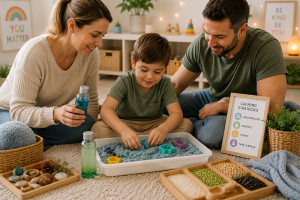
Activities involving sand, water, rice, playdough and natural materials stimulate multiple senses simultaneously, helping children build stronger learning pathways.
Fine Motor Skills Support Academic Success
Strong fine motor skills directly influence school readiness.
Play-based activities help children develop the hand strength and coordination required for:
- Writing
- Drawing
- Cutting
- Using classroom tools
- Self-care tasks
Simple activities such as threading beads, using tongs and manipulating playdough build these essential skills.
Problem-Solving Skills Develop Through Play
Play naturally encourages children to experiment and solve problems.
Examples include:
- Building towers with blocks
- Completing puzzles
- Creating obstacle courses
- Exploring sensory bins
- Constructing with recycled materials
Through these experiences, children learn perseverance, logical thinking and creativity.
Social Skills Support Learning Success
Academic achievement depends on more than cognitive ability.
Play-based learning helps children develop:
- Communication skills
- Cooperation
- Emotional regulation
- Turn-taking
- Empathy
- Conflict resolution
These social-emotional skills support classroom participation and long-term educational success.
Play-Based Learning Activities to Try at Home
Parents can support academic development through simple activities.
Create a Sensory Learning Tray
Include:
- Rice
- Letters
- Numbers
- Scoops
- Small toys
Children can practise counting, sorting and letter recognition while engaging their senses.
Build with Blocks
Encourage children to:
- Count blocks
- Create patterns
- Compare sizes
- Solve construction challenges
This activity supports mathematics, engineering and problem-solving skills.
Use Pretend Play
Create imaginative play experiences such as:
- Shops
- Veterinary clinics
- Restaurants
- Construction sites
Pretend play builds literacy, communication and social skills simultaneously.
Supporting South African Families Through Learning Through Play
Play-based learning provides an affordable and highly effective way to support children’s education. South African parents, teachers and homeschooling families can create meaningful learning experiences using household items, natural materials and everyday activities.
The goal is not to teach children through pressure but to encourage learning through curiosity, exploration and enjoyment.
If you would like advice on educational sensory products or learning resources, visit the “Contact Forever Sensory Kids” page for support and guidance.
Conclusion: How Play-Based Learning Improves Academic Skills
Understanding how play-based learning improves academic skills allows parents and educators to create engaging learning experiences that support children’s long-term success.
By encouraging play, sensory exploration and creativity, we help children build the cognitive, social and emotional foundations needed for academic achievement and lifelong learning.